Simple Sunflower Line Art
A Clean Design for Business Use
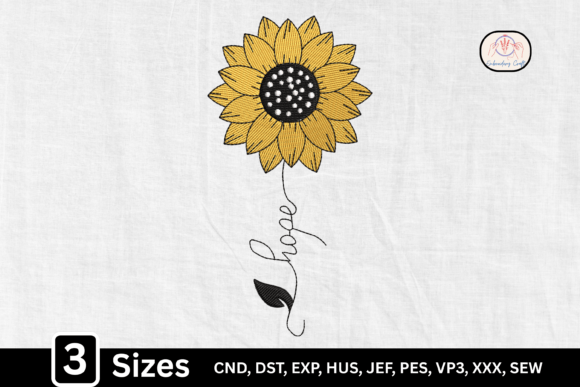
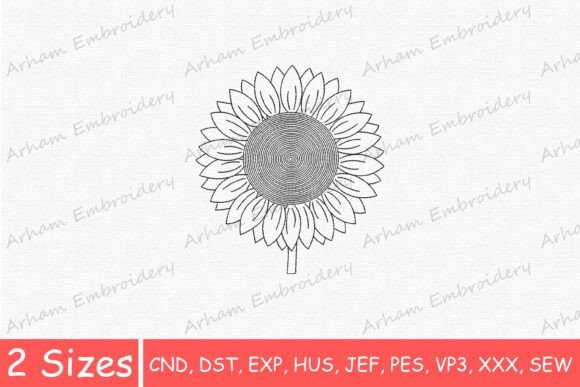
The Simple Sunflower Line Art embroidery design immediately feels modern and elegant. Its clean, minimalist outline suggests a professional approach to branding, making it a strong candidate for small business merchandise. As an experienced embroidery designer, I find the design’s simplicity appealing for both brand identity and custom apparel applications. The sunflower is rendered in a way that emphasizes its natural form without overwhelming detail, which is ideal for those looking to convey a sense of sophistication and clarity.
Design Review for Commercial Embroidery Projects
When evaluating Simple Sunflower Line Art for commercial use, the first thing that stands out is its adaptability. The design is versatile enough to work on a variety of items such as embroidered patches, cap embroidery, tote bag design, and even apron embroidery. It maintains its visual integrity across different scales and fabric types, which is crucial for small business merch and branded product add-ons.
The Simple Sunflower Line Art design features a balanced stitch density that ensures it remains legible even when scaled down. This makes it suitable for use on small patch sizes or curved surfaces like cap fronts. However, designers should be cautious with high stitch density areas, as they may require more careful handling during the embroidery process.
Where to Use Simple Sunflower Line Art
Simple Sunflower Line Art works best as a subtle accent rather than a dominant feature. It can serve as a chest logo accent, product packaging accent, or a branding element on custom apparel. For instance, it could be used on tote bags to add a touch of floral elegance, or as a handmade product label on aprons and work shirts. The design’s minimalist nature also makes it a great fit for Etsy branding and craft business assets.
It’s important to consider how the design will look on different fabrics. On dark uniforms or textured fabrics, the contrast between the thread colors and the background becomes more critical. Testing the design in black and white before final production is a good practice to ensure visibility and clarity.
Practical Notes for Embroidery Designers
As an embroidery designer, I recommend several steps before using Simple Sunflower Line Art for commercial projects:
- Test in black and white to assess how the design performs in monochrome settings.
- Check if it works at small patch size to ensure legibility and clarity.
- Review thread color contrast to guarantee visibility on the intended fabric.
- Inspect spacing to avoid overcrowding or distortion in the finished product.
- Confirm hoop size to ensure proper placement and stitching quality.
- Test on real fabric to identify any potential issues with texture or fabric compatibility.
- Use proper stabilizer to maintain fabric stability during embroidery.
- Create a printable mockup for client approval before production.
- Compare it beside other design assets to maintain visual consistency across your brand.
- Confirm commercial licensing to ensure legal use for business purposes.
Impact on Brand Identity and Customer Trust
The Simple Sunflower Line Art design has the potential to enhance brand identity by offering a consistent and recognizable visual element. Its elegant and modern aesthetic aligns well with brands that value minimalism and sophistication. When used consistently across small business merch, custom apparel, and product packaging accents, it helps build customer trust and recognition.
For businesses that rely on handmade product or digital embroidery file offerings, this design can serve as a valuable addition to their design assets. It supports a cohesive look while allowing for creative flexibility in application.
Conclusion
Simple Sunflower Line Art is a thoughtful and adaptable embroidery design that offers great potential for small business use. Whether used on embroidered patches, cap embroidery, or apron embroidery, it provides a clean, professional look that resonates with a wide range of audiences. As an embroidery designer, I recommend testing and refining its use based on specific project needs to ensure optimal results and brand alignment.